|
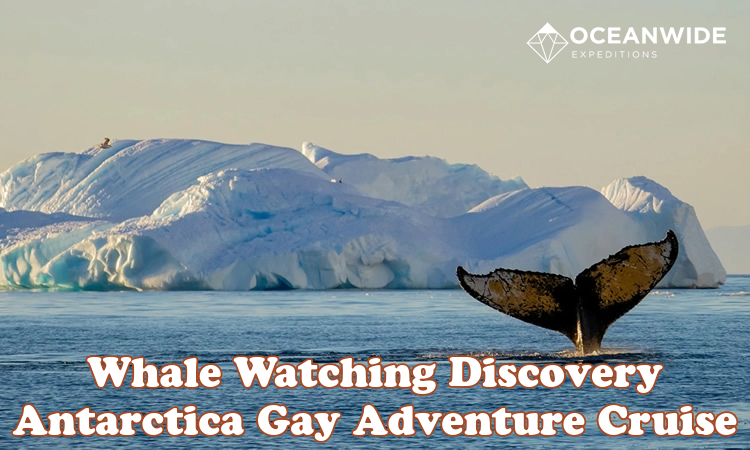
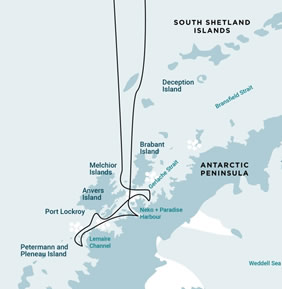
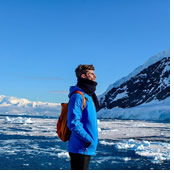  Antarctica Whale watching discovery - in search for the giants of the seas. Live the explorer’s dream during this 10-night cruise through the Beagle Channel and across the Drake Passage. Our March 2027 cruise is a whale watching tour. Diving is optional on this departure. Possible visits to Danco Island, Neko Harbour, Paradise Bay, Pleneau & Petermann Islands, Port Lockroy, Wilhelmina Bay & Guvernoren and Charlotte Bay. This Antarctic Peninsula cruise delivers you into a landscape of rugged rock, pure white snow, and a fantastic variety of wildlife. Come say hello to whales, seals, and penguins. Antarctica Whale watching discovery - in search for the giants of the seas. Live the explorer’s dream during this 10-night cruise through the Beagle Channel and across the Drake Passage. Our March 2027 cruise is a whale watching tour. Diving is optional on this departure. Possible visits to Danco Island, Neko Harbour, Paradise Bay, Pleneau & Petermann Islands, Port Lockroy, Wilhelmina Bay & Guvernoren and Charlotte Bay. This Antarctic Peninsula cruise delivers you into a landscape of rugged rock, pure white snow, and a fantastic variety of wildlife. Come say hello to whales, seals, and penguins.
Journey to the world’s most remote continent from Ushuaia, Argentina. Sail down the Beagle Channel and across the Drake Passage between South America and Antarctica.
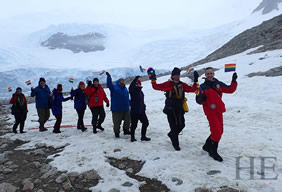
We will have the opportunity to trek the icy and rocky landscape as often as possible. This rugged and savage wilderness is teeming with extensive wildlife. Be on the lookout for rookeries of penguins and various seals as we glide past the icebergs, massive mountains, and ice shelves along the coast.
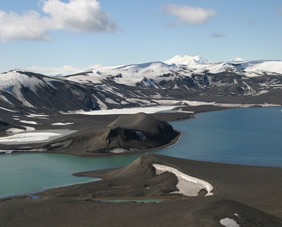
Weather permitting, we may have the chance to explore rare human vestiges such as an old whaling station on Deception Island. Perhaps you’ll even want to join the Polar Plunge with a dip the icy waters.
The ship is from the renowned Oceanwide Expeditions, with a fleet of 108 to 174-passenger Expedition Ships. Since it is not a private charter, we will be part of a fun, friendly group from around the world. This is truly a voyage of a lifetime during which, weather and ice conditions permitting, we will encounter the ever-changing world of Antarctica.
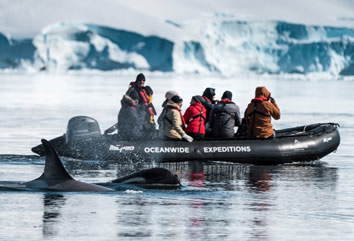
The experience visiting the Antarctic Peninsula may vary depending on local ice and weather conditions. The availability of landing sites and opportunities to see wildlife are different on each journey. The final itinerary will be determined by the Expedition Leader and Captain on board. Flexibility is paramount for expedition cruises.
The adventure starts in Ushuaia, Argentina, the capital of the province of Tierra del Fuego, and the southernmost city in the world. For those arriving early, consider horseback riding, hiking, wind sailing, canoeing, kayaking, fishing, and diving. We also offer an optional afternoon guided tour to the “end of the world” monument in Tierra del Fuego National Park. You can also plan a visit to Lago Escondido and Lago Fagnano.
The official tour starts with ship embarkation on Day 1. However, we highly recommend arriving in Ushuaia two or more days before sailing to minimize the risk of travel problems impacting your cruise.
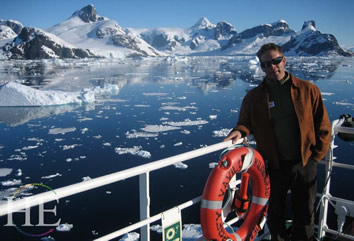
• Journey to Earth's most remote continent!
• See some of the most stunning wilderness on earth.
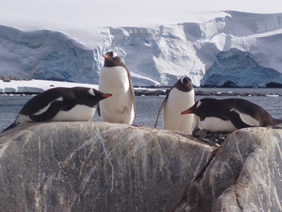
• View extraordinary concentrations of versatile wildlife such as penguins, seals and giant petrels.
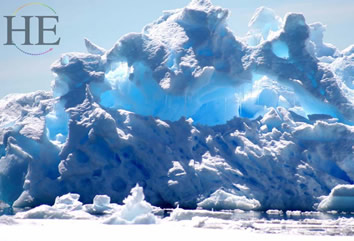
• Glide alongside icebergs, as glacier fields rise up to rugged mountains.
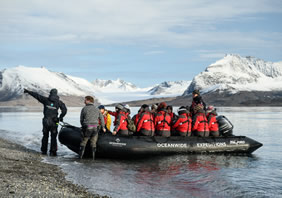
• Ride a Zodiac raft to shore, then walk on the continent, a once-in-a-lifetime experience.
• Maximize your time ashore – with only 108 passengers, everyone interested can enjoy every shore visit.
• Diving is an optional activity. Experience with cold-water diving and dry-suit dives (at least 30) is a must!
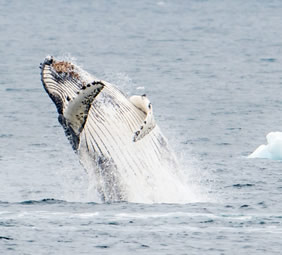
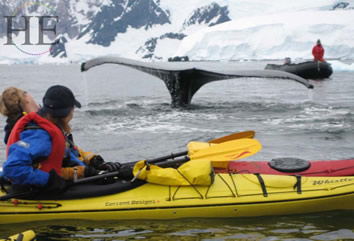
• Whale safari - One of the greatest sources of joy and wonder found on our cruise is when we make contact with the gentle giants of the seas, the whales.
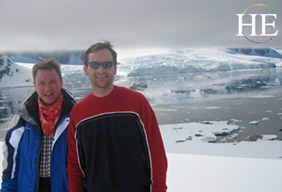
• Enjoy this once in a lifetime trek with a friendly group of gay men, lesbians and friends. (Please note that this is not a charter, so our group will be among other passengers on the ice-strengthened m/v Ortelius.)
Day 1 -
 Our voyage begins where the world drops off. Ushuaia, Argentina, reputed to be the southernmost city on the planet, is located on the far southern tip of South America. Our voyage begins where the world drops off. Ushuaia, Argentina, reputed to be the southernmost city on the planet, is located on the far southern tip of South America.
Starting in the afternoon, you embark from this small resort town on Tierra del Fuego, nicknamed “The End of the World,” and sail the mountain-fringed Beagle Channel for the remainder of the evening.
Days 2 - 3 -
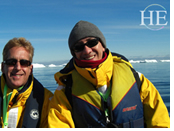 Over the next two days on the Drake Passage, we enjoy some of the same experiences encountered by the great polar explorers who first charted these regions: cool salt breezes, rolling seas, maybe even a fin whale spouting sea spray. After passing the Antarctic Convergence – Antarctica’s natural boundary, formed when north-flowing cold waters collide with warmer sub-Antarctic seas – you are in the circum-Antarctic upwelling zone. Over the next two days on the Drake Passage, we enjoy some of the same experiences encountered by the great polar explorers who first charted these regions: cool salt breezes, rolling seas, maybe even a fin whale spouting sea spray. After passing the Antarctic Convergence – Antarctica’s natural boundary, formed when north-flowing cold waters collide with warmer sub-Antarctic seas – you are in the circum-Antarctic upwelling zone. Some of the native birds include Petrels (Blue, Wilson’s Storm, and Antarctic); Albatross (Wandering, Grey-Headed, Black-browed, and Light-mantled Sooty); Southern Fulmars; and Cape Pigeons. Soon we’ll be seeing icebergs near the South Shetland Islands.
Days 4 - 8 -
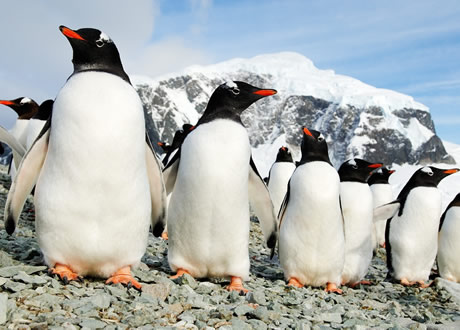
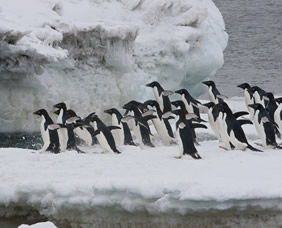
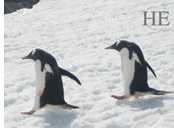 During the days of sailing among the islands off the Antarctic Peninsula, we will view numerous islands such as the Danco and Petermann Islands. Encounter or observe diverse wildlife colonies including Gentoo Penguins, Brown and South Polar Skuas, Antarctic Terns, Dominican Gulls, Chinstrap Penguins, Adelie Penguins, Blue-eyed Shags, Weddell or Crabeater Seals. Appreciate the breathtaking scenery of deep-cut fjords, glaciers, and alpine peaks. During the days of sailing among the islands off the Antarctic Peninsula, we will view numerous islands such as the Danco and Petermann Islands. Encounter or observe diverse wildlife colonies including Gentoo Penguins, Brown and South Polar Skuas, Antarctic Terns, Dominican Gulls, Chinstrap Penguins, Adelie Penguins, Blue-eyed Shags, Weddell or Crabeater Seals. Appreciate the breathtaking scenery of deep-cut fjords, glaciers, and alpine peaks.
From the deck, we are likely to spot Humpback, Minke, and Fin Whales. Zodiac cruises and shore visits will provide close-up wildlife viewing and a deep appreciation for the unique landscape (and icescape) of the region.
These are possible stops during the tour. The schedule is always dependent on the weather conditions:
Danco Island
Activities here may focus on the gentoo penguins nesting on the island, in addition to the Weddell and crabeater seals that can be found nearby.
Neko Harbour
An epic landscape of mammoth glaciers and endless wind-carved snow, Neko Harbour offers opportunities for a Zodiac cruise and landing that afford the closest views of the surrounding alpine peaks.
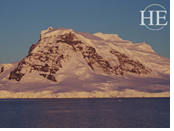 Paradise Bay Paradise Bay
Enjoy a Zodiac cruise in these sprawling, ice-flecked waters, with a good chance of encountering a humpback and minke whales.
Pléneau & Petermann Islands
If the ice allows it, sail through the Lemaire Channel in search of humpback and minke whales, as well as leopard seals.
Port Lockroy
After sailing through the Neumayer Channel, we may get a chance to visit the former British research station – now a museum and post office – of Port Lockroy on Goudier Island. We may also be able to partake in activities around Jougla Point, meeting gentoo penguins and blue-eyed shags.
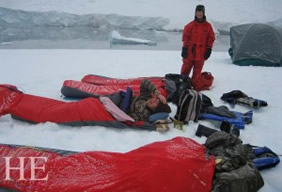
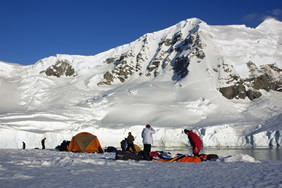
At the nearby sites, such as Damoy Point there may be the opportunity for snowshoeing to the old ski-way, this is also one of our favorite camping sites.
Wilhelmina Bay & Guvernøren
This is a great place to spot humpback whales. We may embark on a Zodiac cruise ending at the ghostly wreck of the Guvernøren, a whaling vessel that caught fire here in 1915. Around the Melchior Islands, amid a frozen landscape peopled with icebergs, we may encounter even more whales, leopard seals, and crabeater seals.
Charlotte Bay
We might encounter a variety of wildlife, including gentoo penguins, Weddell seals and possibly some migrating whale species such as humpback whales or minke whales.
Days 9 - 10 -
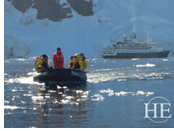 After several exhilarating days exploring the ice-covered land of Antarctica, we start our way back across the Drake Passage. Your return voyage is far from lonely. While crossing the Drake, you’re again greeted by the vast array of seabirds remembered from the passage south. But they seem a little more familiar to you now, and you to them. After several exhilarating days exploring the ice-covered land of Antarctica, we start our way back across the Drake Passage. Your return voyage is far from lonely. While crossing the Drake, you’re again greeted by the vast array of seabirds remembered from the passage south. But they seem a little more familiar to you now, and you to them.
Day 11 -
Our journey ends with early morning arrival in Ushuaia Harbor. A mid-morning transfer will be provided to Ushuaia Airport for flights around noon or later, or you can stay in downtown Ushuaia to begin your next adventure.
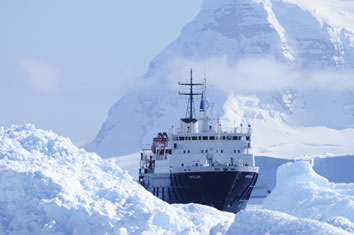
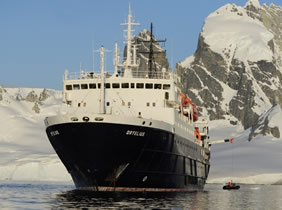
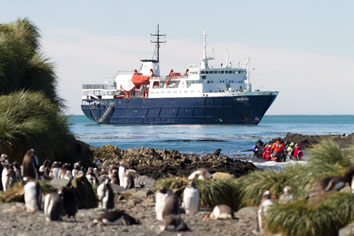
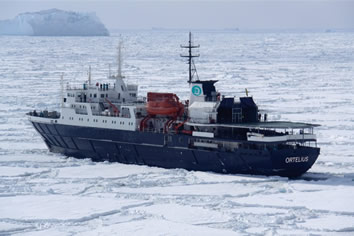
Ortelius was originally the Marina Svetaeva. Built in Gdynia, Poland in 1989, it served as a special-purpose vessel for the Russian Academy of Science. Later it was re-flagged and renamed after the Dutch/Flemish cartographer Abraham Ortelius (1527 – 1598), who in 1570 published the first modern world atlas: Theatrum Orbis Terrarum or Theater of the World. At that time his atlas was the most expensive book ever printed. Ortelius is classed by Lloyd’s Register in London and flies the Dutch flag.
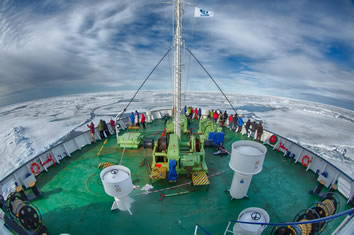
The vessel has the highest ice-class notation (UL1, equivalent to 1A) and is therefor suitable to navigate in solid one-year sea ice as well as loose multi-year pack ice. Ortelius can accommodate up to 108 passengers and has an abundance of open-deck spaces. It is manned by 24 highly experienced nautical crew members, 20 hotel staff, eight expedition specialists (one expedition leader, one assistant, and six lecturer-guides), and one doctor.
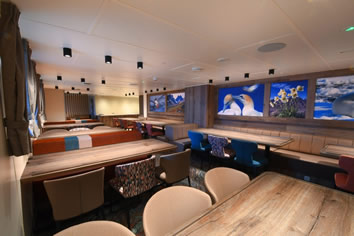
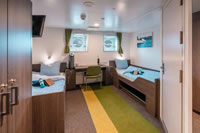
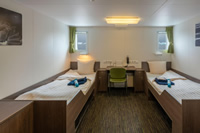
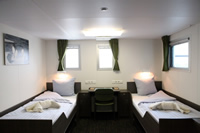
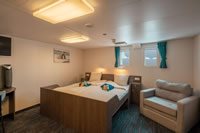
Please be aware that a small number of cabins may have a partially obstructed view due to the size of the windows and the design requirements of the ship. For example, some windows may be partly obstructed in the lower half by a gangway. The best view is always on the outer deck or the bridge. Though our voyages are primarily meant to offer our passengers an exploratory wildlife program with as much time ashore as possible, Ortelius offers all the comforts of a standard hotel - along with a bar and lecture room. Flexibility assures maximum wildlife opportunities. As such, Ortelius carries 10 Zodiacs with 60hp Yamaha engines.
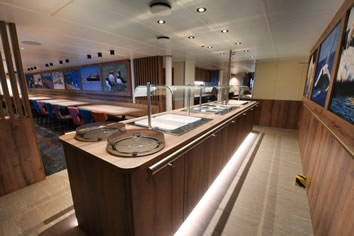
Passengers on a typical voyage range from in their 30s to their 80s, with the majority usually between 45 - 65. Our expeditions attract independent travelers from around the globe who are characterized by a strong interest in exploring remote regions. The camaraderie that develops on board is an important part of the Oceanwide experience, and passenger group include several nationalities.
In keeping with the spirit of expedition, dress on board is informal. Bring casual and comfortable clothing for all activities, and keep in mind that much of the scenery can be appreciated from deck - which can be slippery. Bring sturdy shoes with no-slip soles, and make sure your parka is never far away in case one of our crew shouts “Whales!” over the loudspeaker and you have to dash outside in a moment’s notice. Opt for layers, as it is comfortably warm aboard the ship though often cold on deck.
|